
Choosing the Best Pair of Goggles for your Swimmer
It’s hard to feel comfortable and confident in the pool when your eyes are stinging from the pool water and you can’t see where you’re going. That’s why getting the right pair of goggles for your swimmer makes a huge difference in their swim lesson. When you’re picking goggles, think about these three factors —
Adjustability
Valuable lesson time is wasted fiddling with goggle straps when they are difficult to tighten or loosen. If you have to pull really hard to make the straps budge or apply the fine motor skills of an expert guitarist to secure them in place, you’ll end up paying to watch your coach wrangle a pair of goggles into submission for five minutes, instead of teaching your kid to swim.
Strong Seal
The whole point of goggles is to keep water out of your eyes. Goggles accomplish this by sealing to your face like a suction cup. If the rubber seal is not effective, all goggles will do is trap water inside the goggle frame – that feels even worse than swimming with no goggles at all! Test the rubber seal of your goggles by pressing them against your swimmer’s face and listening for an audible “quacking” sound. If a pair of goggles goes on and nobody hears it… do they really work? (No.)
Fitted Frame
Most sensory discomfort when wearing goggles is caused by the size and shape of the frame. The best pair of goggles for your swimmer will cover their eyes without digging into their eye sockets. At the same time, a huge frame, like those on scuba diving goggles, isn’t helpful either. The larger the frame, the more difficult it will be for it to align with your swimmer’s bone structure and seal around their eyes.
Rating Goggles from our Backup Bucket
If you forget your goggles, we have many pairs to spare! However, they’re not all built equal. Hopefully these ratings help you decide what kind of goggles would be best to purchase for your swimmer, and why.
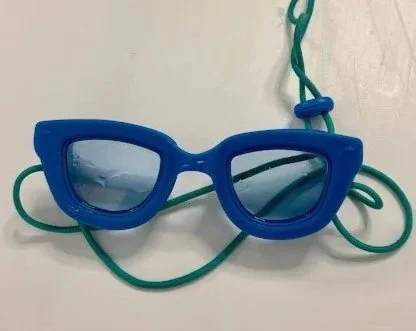
8/10 Speedo Kids Goggles
The straps of these goggles are easy to adjust, difficult to break, and slow to slip down your swimmer’s head. The frame is wide enough to provide a secure but relaxed fit, so your swimmer won’t feel like their eyeballs are being squeezed out of their head. The suction is effective after a decisive squeeze against your swimmer’s face – though they may need their coach to make a convincing “quack quack” sound to really seal the deal! It’s the perfect beginner pair for young swimmers with small heads and big feelings about water getting into their eyes.
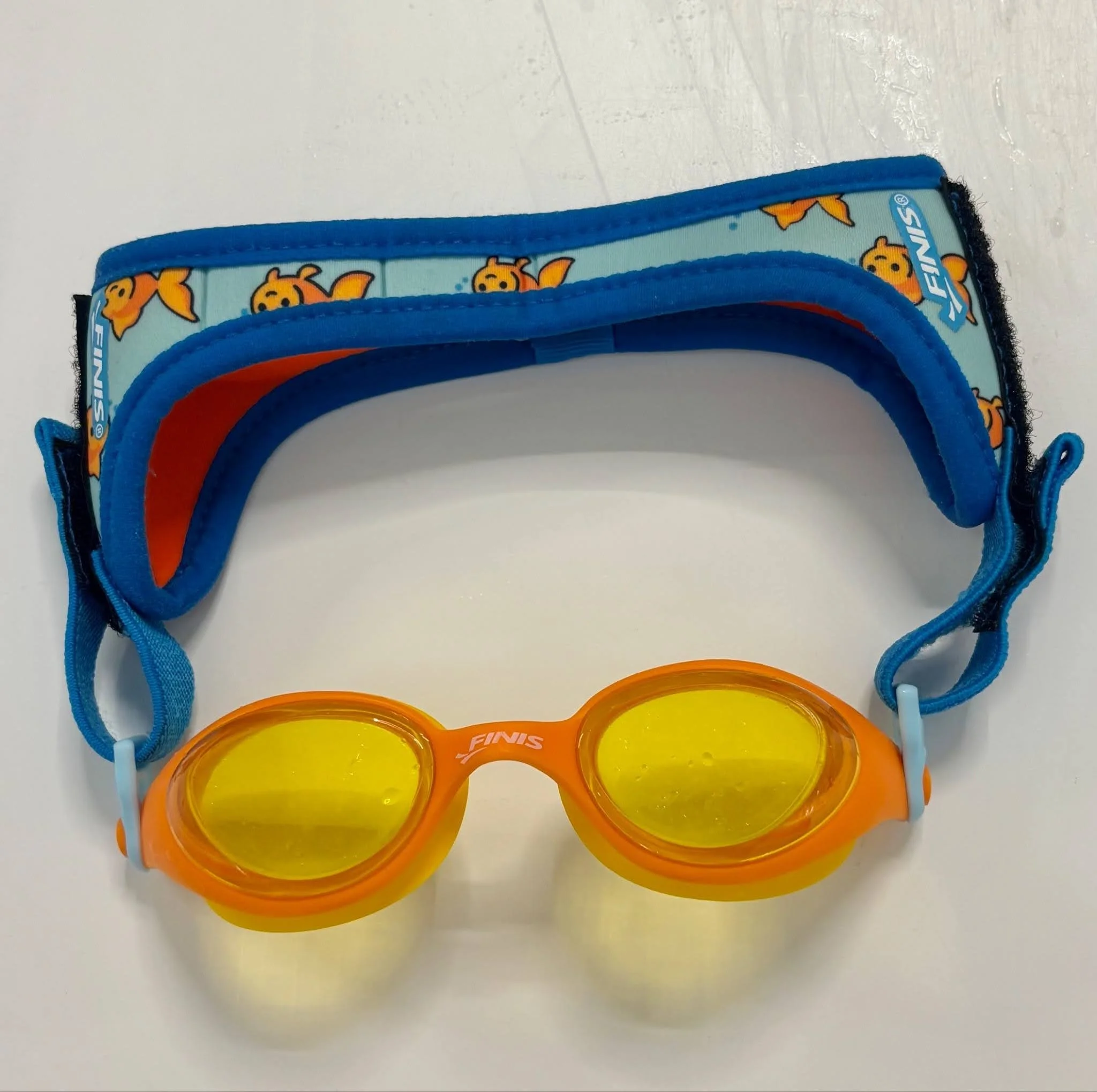
5/10 “Halo” Fabric Goggles
With a thick fabric strap that cradles your swimmer’s head like a halo, these goggles are designed to stay put. They are easy to adjust with a simple velcro strap, and great for kids who complain that their goggles are “too tight” no matter how much you loosen them. The frame is narrower and more fitted around the eyes than other beginner pairs, but the suction is not as strong, which prevents that uncomfortable squeezing sensation. On the flip side, lighter suction means they are more susceptible to water leakage, so they are better for short, easy swims from island to island. The shape and size of the strap is also not adjustable, so it will either fit your swimmer’s head perfectly, or not at all.
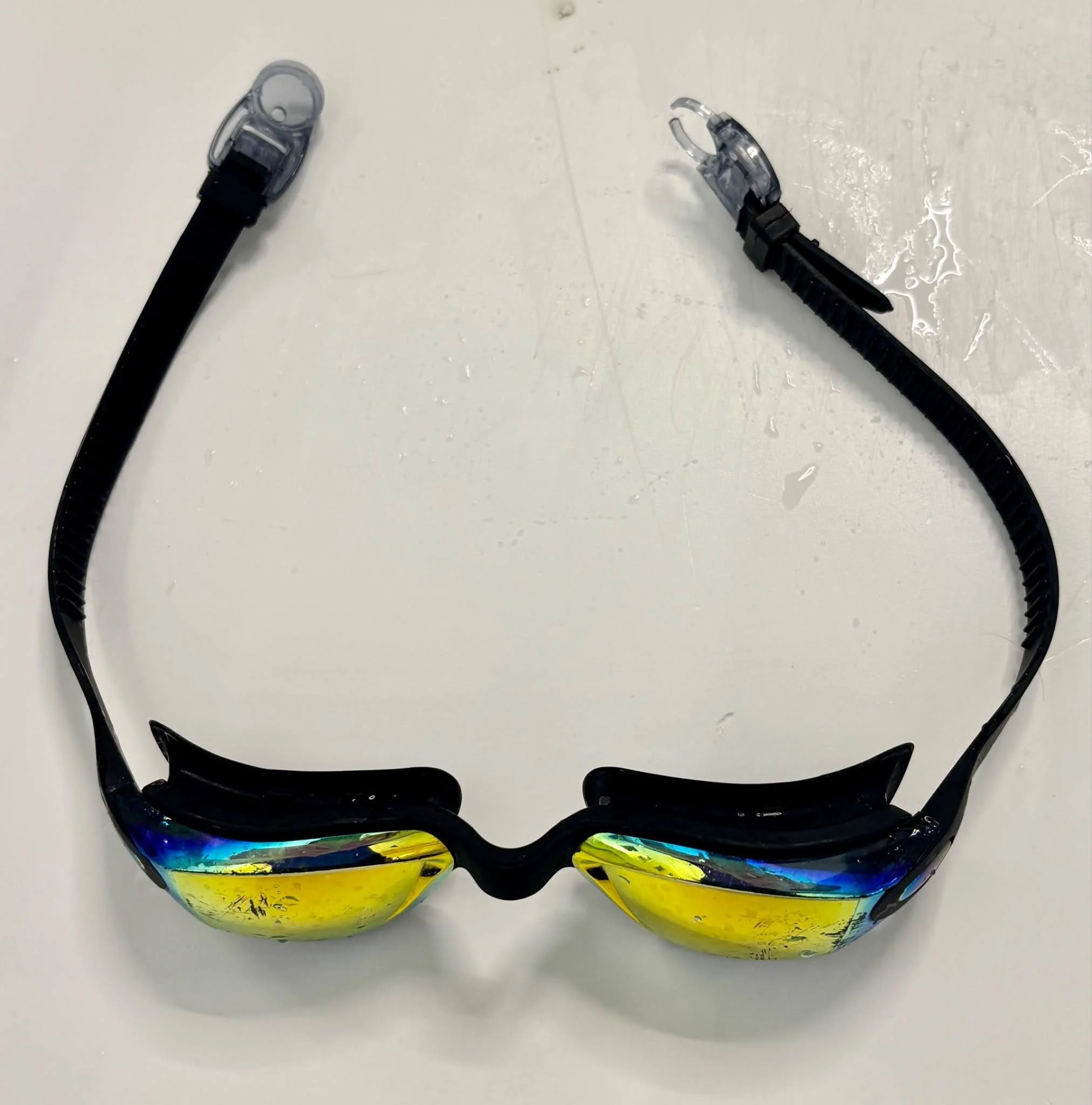
6/10 Open Clasp Goggles
If you know, you know: getting a standard pair of goggles onto someone else’s head is not an intuitive task. These goggles attach in the back of the head, making it easier for you or your coach to get them onto your child’s head with minimal pulling, slipping, and drama. The thick rubber seal on these goggles also creates a tight vacuum seal, keeping that stingy chlorinated water out of your swimmer’s eyes. The only drawback is that these clasps don’t always work as well as advertised. Either you can’t seem to lock them into place, or they are impossible to pull apart. If you have these goggles, make sure they’re functioning as intended before your class.
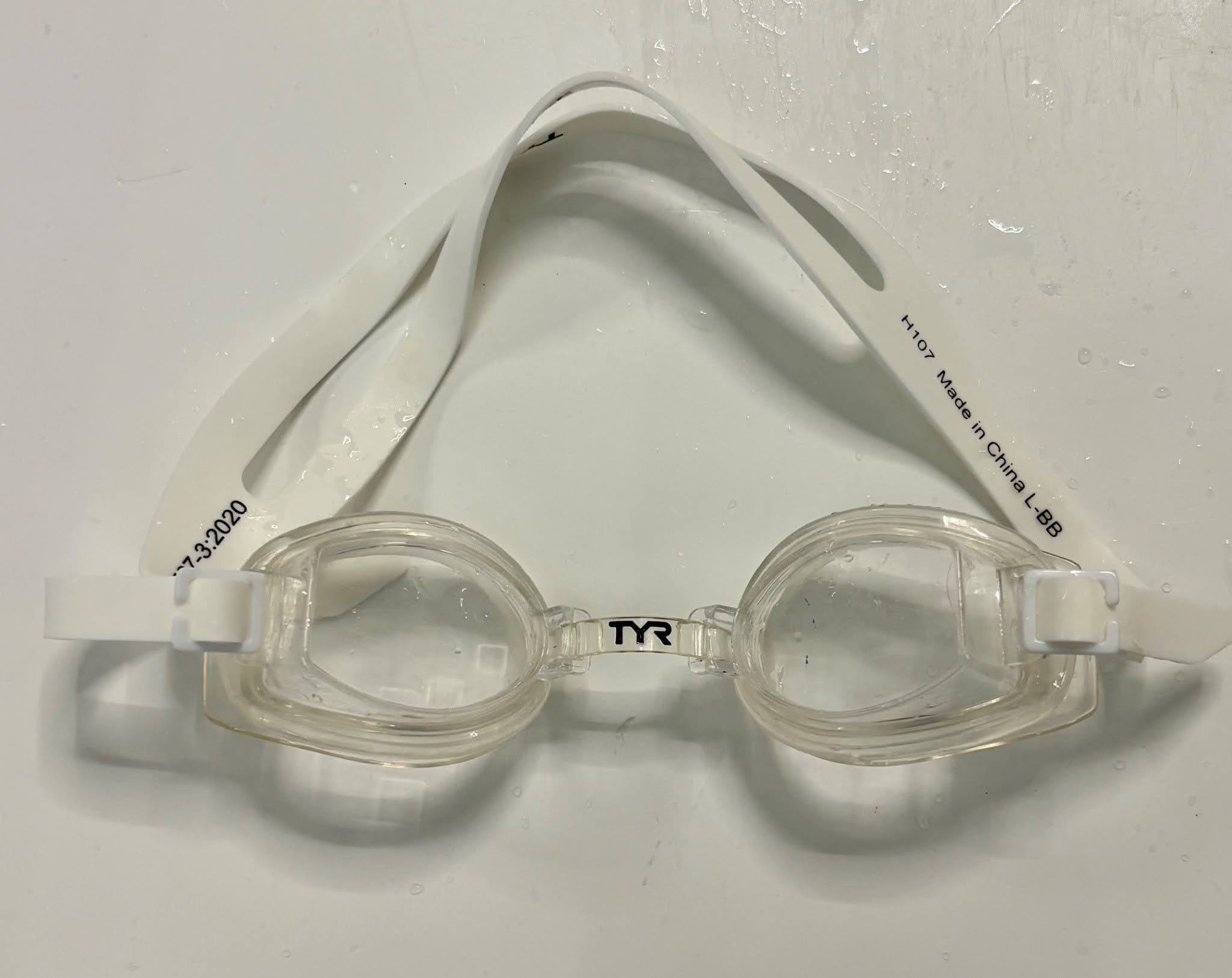
7/10 Racetech Goggles
Goggles like these work well for older swimmers. The rubber straps maintain tension and the suction on the frames is strong, so they don’t slip and they keep water out. In exchange for a tight fit, the straps can be tedious to adjust. If you bring these goggles from home, you should adjust the fit before their lesson so you don’t waste precious swimming time fiddling with the buckle. The nose bridge is also better suited to larger faces, and the narrow frame squeezes around the eyes, so these are not ideal for younger swimmers.
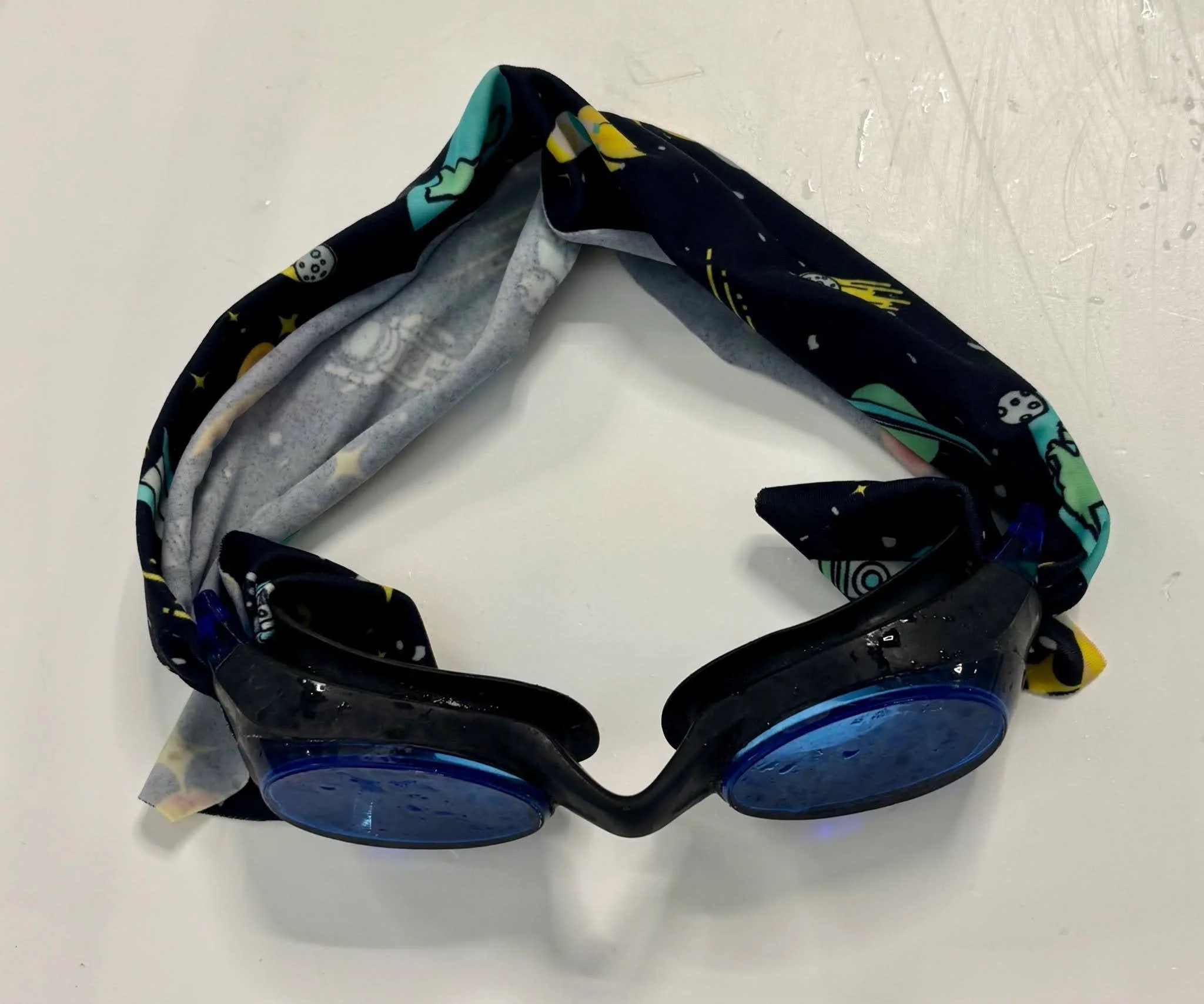
2/10 Fabric Band Goggles
Are they comfortable? Yes! Do they work? Not really. This thin, stretchy fabric offers little tension to hold the goggle frame firmly in place, and it only gets weaker over time from the chlorinated water exposure. They’re also tedious to tighten, and the fabric often ends up inside the goggles, so we are constantly readjusting these. They’re better than nothing, but not by much.
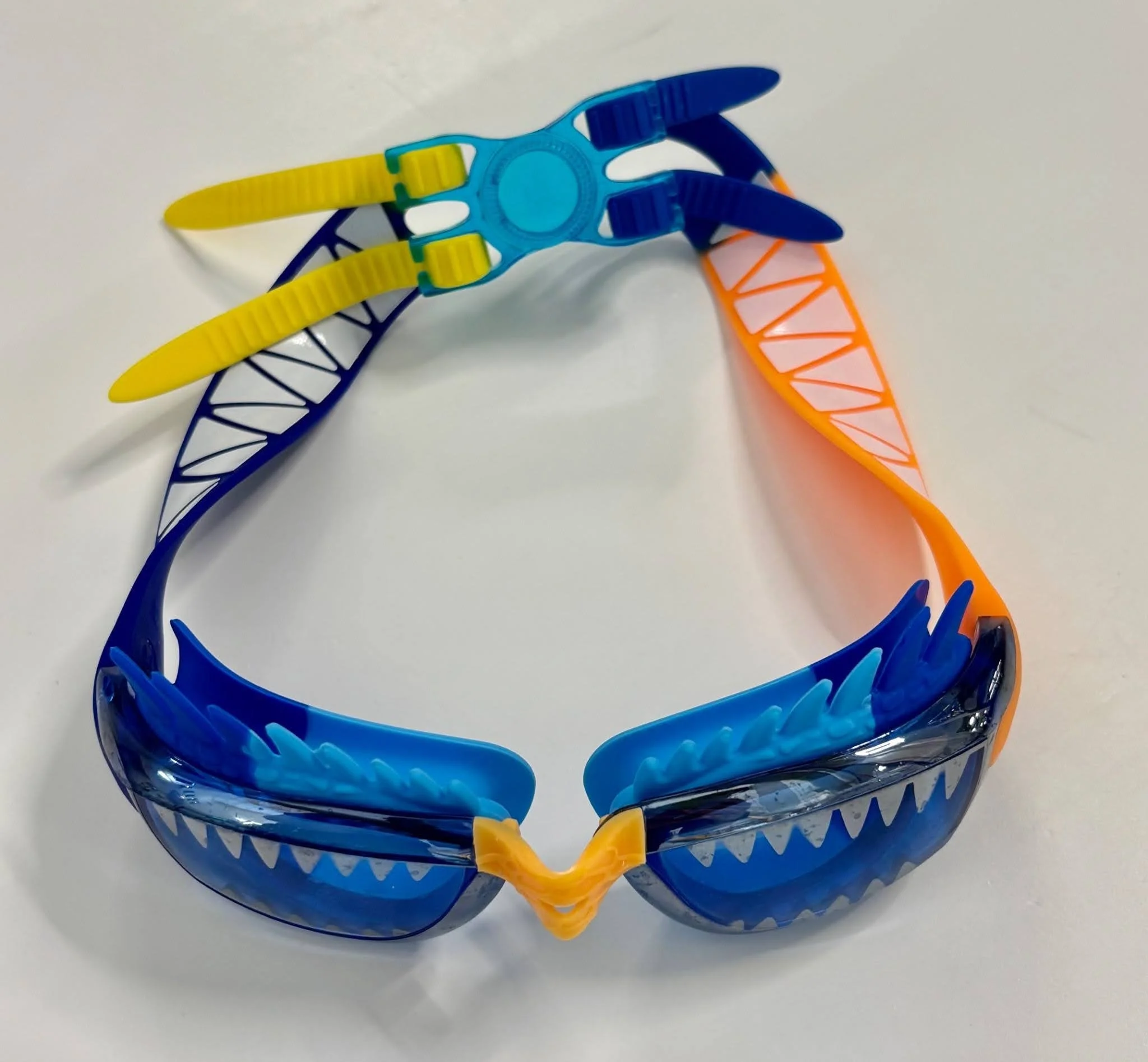
10/10 G.O.A.T. Goggles
These goggles combine fashion and function without compromising on either. The clasp is functional and the double-straps are extra secure and easy to adjust. The suction is super strong but not uncomfortable thanks to the wide frame. Kids look cool when they wear these goggles, and they know it! Shark teeth on your goggles, shark moves in the pool. This is definitely our favorite pair.
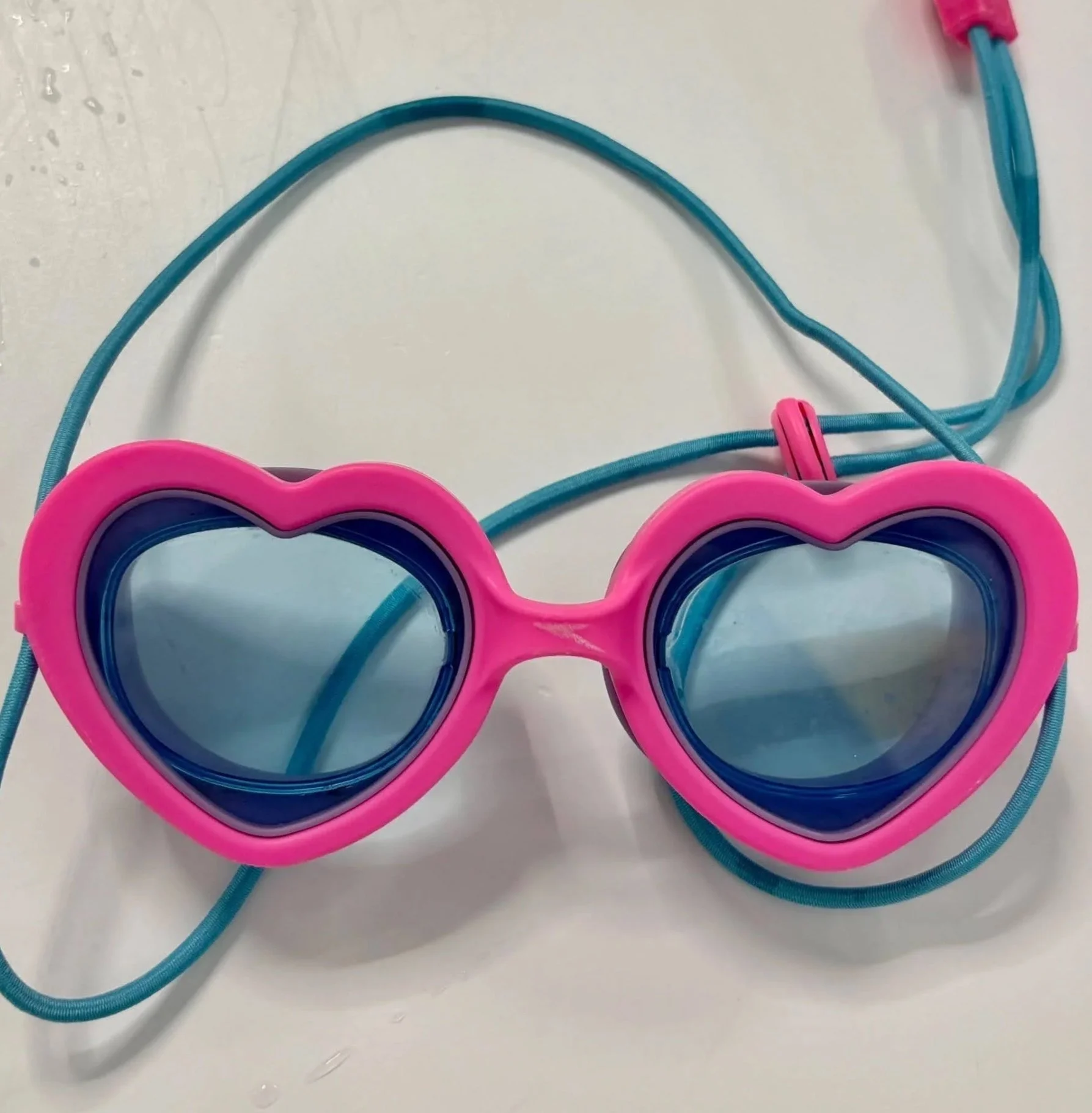
5/10 Speedy Kids Goggles with Funky Shapes
These easily adjustable, super-cute goggles are a fan favorite. Sadly, they’re more fashionable than functional. Goggles with fun shapes like hearts, clam shells, or rainbows aren’t designed for an optimal fit. The bigger the decorative flair, the more challenging it is to push the goggles’ rubber seal around your swimmer’s bone structure, which means they are more likely to flood with water during each swim. Plus, the more attached your swimmer is to their adorable goggles, the more reticent they may be to borrow a plainer pair on the day you inevitably forget them.